


By Cii Radio Features | Sabeelul Hayat Interview with Mas-oodah Jappie (Part 1/6)
He remembers the classroom more vividly than the stage.
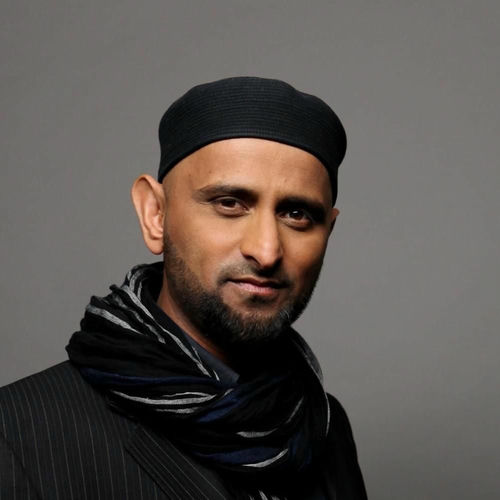
Dozens of children, their voices tumbling through a simple chorus he had written. Zain Bhikha stood there watching them sing, and something inside him shifted. “They say the two most important days in your life are the day you’re born and the day you find out why,” he recalls. “That day, with those children, I found my why.”
That sense of purpose has powered three decades of one of the Muslim world’s most beloved voices. Thirty years of lyrics that have outlived formats, crossed languages, and turned South African jalsas, London auditoriums, and rush hour drives into echo chambers of faith.
A beginning written in loss
In 1994, South Africa was coming out of apartheid. Zain was nineteen—half student, half dreamer—when tragedy and triumph collided. He won a Radio 702 singing competition just as his best friend was shot and killed. “I was asking the big questions,” he says. “What’s the purpose of life? What does it mean to be Muslim?”
Out of that grief came Give Thanks to Allah—the simple nasheed the world first mistook for a “Michael Jackson Nasheed”. Then a school anthem for Pretoria Muslim School, and a small cassette made in a local studio booked by his father. “That little tape,” he laughs, “was the start of everything.”
It was also the moment English nasheed found its South African accent. Up to this point Islamic songs were largely in Arabic and Urdu.
The advice that kept the joy alive
Fame never quite seduced him. Early on, Yusuf Islam (Cat Stevens) offered advice that would define his life:
“Do this because you love it,” Yusuf told him, “and don’t ever make it your living. It will take away the joy.”
Zain listened. “I’ve never done this full-time,” he says. “My dad told me the same—keep it a hobby. It’s been the best decision of my life.”
While others chased charts, he built a body of work that felt more like sadaqah jariyah than show-business—one gentle nasheed at a time.
When songs become therapy
Ask him how he writes and he smiles: “my friend Dawud Wharnsby says the reason we write songs is because we don’t want to go for therapy. It’s so so true.”
Ideas usually start as a whisper—half lyric, half melody—recorded into his phone. Some bloom overnight (Mountains of Makkah poured out in two days). Others simmer for years, like Praise to the Prophet, whose opening lines waited two years for the rest of the song to arrive.
He never forces it. “I’d like to think every song mirrors my own journey—growing up, becoming a husband, a father, a grandfather, and, always, trying to draw closer to Allah.”
The mountains that spoke back
If his career had a summit, it was his Hajj. He was young, walking the sacred paths beside his wife, surrounded by rocky silence. “I kept looking at the mountains around the Kaaba and thinking: What have they witnessed? If they could speak, what would they say?”
Mountains of Makkah was born before he left the city. “It wrote itself,” he says. “Every time I perform it, I still feel those words.”
Three decades later, audiences still do too. The song remains a spiritual anchor for pilgrims and a rite of passage for fans who first heard it as children on cassette, and now hum it to their own kids on Cii Radio.
Purpose over perfection
Across the years—CDs, downloads, YouTube—Zain has treated each evolution as another test of intention. “Allah doesn’t judge us by the outcome,” he says. “He judges us by effort and sincerity. We train hard, we aim the arrow, but where it lands is where Allah wills.”
That philosophy has carried him through grief, especially the loss of both parents within the last two years. His upcoming album, Love and Loss, is a tribute to them: twenty songs about the chaos and grace of family, faith, and farewell. “A Million Lives is for my dad. My Beautiful Rose is for my mum,” he says. “But the title track, Allah Is Greater, is for every believer. It reminds us that whatever we go through, Allah is always greater—greater than the pain, the joy, the world itself.”
What remains after thirty years
He’s now a grandfather, living in Cape Town, smiling at a random little boy who called him “Dada” at a restaurant – because of his Dada & Me children’s animated series on Youtube. The circle has closed: the man who once sang to classrooms now writes lullabies for his own grandchildren.
He still brews his coffee in studio, still hums ideas into his phone, still refuses to let the joy fade into business.
“After thirty years,” he says quietly, “it still feels like a flash. But if one person remembers Allah because of a song I sang, that’s success.”
Zain Bhikha’s upcoming album Love and Loss releases soon on YouTube, Spotify and Apple Music.
What’s your earliest memory of a Zain Bhikha song? Share it with us below.

