


3 September 2025
Habib Qeshta and his wife Nour were overjoyed recently to learn they were expecting a baby boy.
Already parents to a daughter born before the Israeli genocide in Gaza, the Palestinian couple had hoped a son might bring some light to their dark days under relentless bombardment.
“We were overjoyed to learn it was a boy,” said Qeshta, 27, speaking to Middle East Eye.
But their joy was shortlived.
“A week later, my wife began experiencing unusual pain. She sensed something was wrong, so we went for another check-up,” he recalled.
“That’s when the doctor told us the foetus had died due to malnutrition.”
Nour had carried the pregnancy for four months under heavy Israeli air strikes near their home.
For months, she barely ate any nutritious meals, due to the ongoing Israeli-imposed famine in Gaza.
“All we have are canned beans, duqqa (local spices usually eaten with bread), and thyme. Sometimes we don’t even have bread,” Qeshta said.
“For a pregnant woman, this can’t be considered nutrition.”
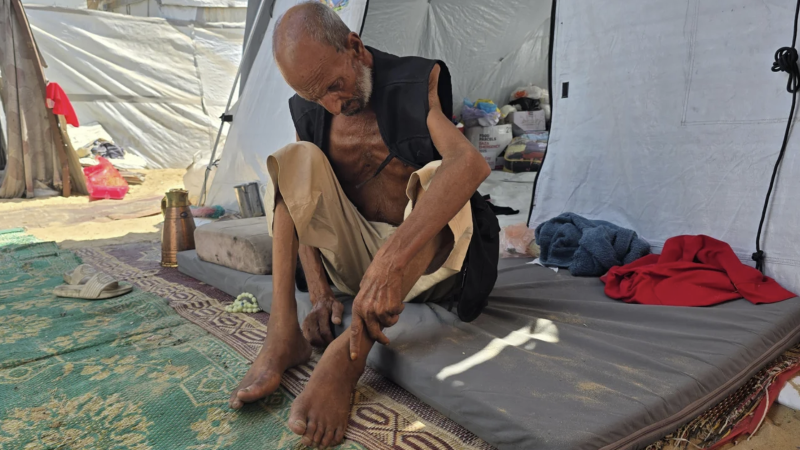
Since Israel imposed a total closure of Gaza’s borders on 2 March, nearly two million people in the besieged enclave have entered a new and devastating phase of the war. Wheat flour has become a luxury item, and hundreds have died from hunger and malnutrition.
Although the borders were partially reopened for some goods and international aid, most residents remain unable to access food, either due to soaring prices, looting of aid trucks and the dangers of reaching hazardous aid distribution points.
With Gaza’s hospitals pushed to the brink of collapse by Israeli bombardments and the ongoing siege, pregnant women are often forced to rely on makeshift medical points for basic check-ups, as hospitals are overwhelmed with the wounded.
“She went to a medical point for tests, and the doctor told her there was no heartbeat – the foetus had died,” Qeshta continued.
“The doctor explained that the baby died from malnutrition. What his mother had been eating lacked adequate nutrition, and the foetus didn’t get what he needed to survive.”
Qeshta’s story is far from isolated.
Source:MEE

