


25 August 2022
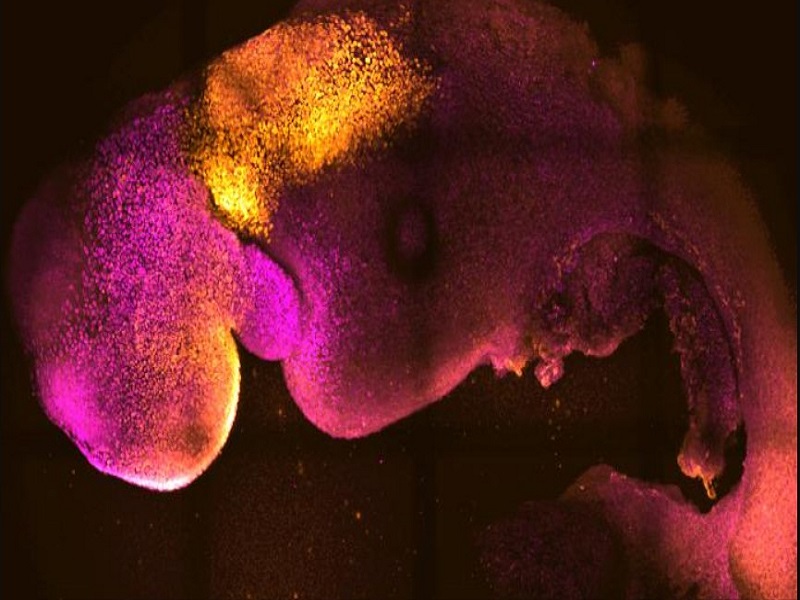
Scientists have created “synthetic” mouse embryos from stem cells without a dad’s sperm or a mom’s egg or womb.
The lab-created embryos mirror a natural mouse embryo up to 8 ½ days after fertilization, containing the same structures, including one like a beating heart.
In the near term, researchers hope to use these so-called embryoids to better understand early stages of development and study mechanisms behind disease without the need for as many lab animals. The feat could also lay the foundation for creating synthetic human embryos for research in the future.
“We are undoubtedly facing a new technological revolution, still very inefficient … but with enormous potential,” said Lluís Montoliu, a research professor at the National Biotechnology Centre in Spain who is not part of the research. “It is reminiscent of such spectacular scientific advances as the birth of Dolly the sheep” and others.
A study published Thursday in the journal Nature, by Magdalena Zernicka-Goetz at the California Institute of Technology and her colleagues, was the latest to describe the synthetic mouse embryos. A similar study, by Jacob Hanna at the Weizmann Institute of Science in Israel and his colleagues, was published earlier this month in the journal Cell. Hanna was also a coauthor on the Nature paper.
At this point, they “struggle to go past” the 8 1/2-day mark, said Gianluca Amadei, a coauthor on the Nature paper based at the University of Cambridge. “We think that we will be able to get them over the hump, so to speak, so they can continue developing.”
The scientists expect that after about 11 days of development the embryo will fail without a placenta, but they hope researchers can someday also find a way to create a synthetic placenta. At this point, they don’t know if they will be able to get the synthetic embryos all the way to term without a mouse womb.
Researchers said they don’t see creating human versions of these synthetic embryos soon but do see it happening in time. Hanna called it “the next obvious thing.”

