


18 march 2020| 23 Rajab 1441| Al Jazeera
President Donald Trump said on Wednesday morning that the border between Canada and the United States would be closed “by mutual consent” to non-essential traffic such as tourists and other visitors.
Trade, the president said on Twitter, would not be affected by the decree. More details are forthcoming, he said.
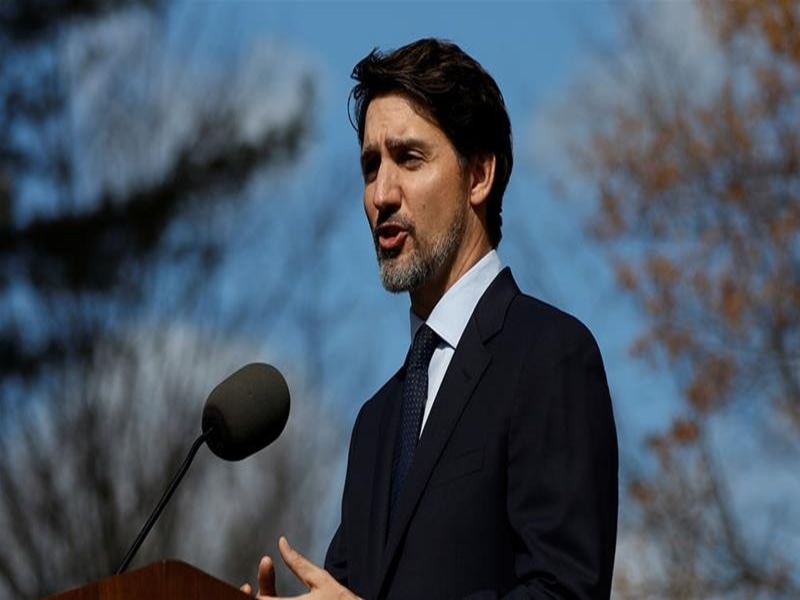
It remains unclear precisely when non-essential travel will be restricted across the border, but Canadian Prime Minister Justin Trudeau is set to speak to the shutdown and unveil major new economic measures that the Canadian federal government is taking in response to the coronavirus Wednesday.
Truck drivers and Canadian snowbirds, who live in the US for part of the year and are returning to Canada, are among those expected to get an exemption. Completely closing the border would cause severe economic damage to both the US and Canada as the two economies are integrated. Much of Canada’s food supply comes from or via the US, and and 98 percent of its oil exports go to the US.
About 18 percent of American exports go to Canada. Canada relies on the US for 75 percent of its exports.
Canadian Deputy Prime Minister Chrystia Freeland said nearly 200,000 people cross the border between the two countries daily and that the traffic is a lifeline for both the Canadians and the Americans on both sides.
“We get our groceries thanks to truckers who drive back and forth across that border,” she said. “Very urgently needed medical supplies and medicines go back and forth across that border. And essential workers go back and forth across that border every day. So it is a unique relationship for Canada, and it’s important for us in handling our situation on the border to be sure that we act to get things right.”
On Monday, Trudeau announced that Canada was closing its borders to people who are not citizens or permanent residents. At the time, he said US citizens would be exempt from the ruling, but all incoming visitors would be required to self-quarantine for 14 days.
Beginning Wednesday, Canada also announced, international flights will only be accepted at four airports: Pearson Airport in Toronto, Trudeau Airport in Montreal, Vancouver International Airport and Calgary International Airport.
Robert Bothwell, a professor of Canadian history and international relations at the University of Toronto, said the government-to-government accord announced Wednesday merely ratifies what is already in place.
“Tourism in the age of the coronavirus is a contradiction in terms,” Bothwell said. “And no Canadian in his or her right mind would want to be caught with the virus on the US side of the border, given the predatory US medical pricing system.
“Actually, the insurance companies have already taken care of the problem,” he added. “Many of us have received notices that they will not pay for virus treatment south of the border.”
According to The Associated Press news agency, the Trump administration is also considering a plan to turn back all people who cross the border illegally from Mexico. The plan is under consideration and no final decisions have been made, officials told the AP.

