


28 November 2025
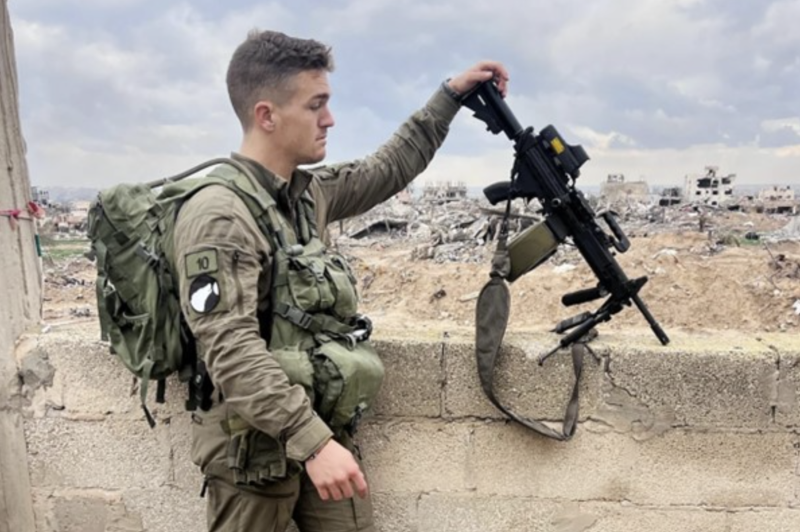
In an ongoing legal battle, South African attorney and human rights defender Ziyaad Ebrahim Patel, alongside Palestinian solidarity activist Safoudien Bester, is challenging the South African government in the Gauteng High Court over allegations that South African nationals are unlawfully serving in the Israeli Defence Forces (IDF) and participating in the conflict in Gaza. The applicants seek several court orders to compel the South African government to uphold its international obligations and address the alleged involvement of South African citizens in the commission of war crimes.
Attorney Patel, who has been involved in human rights advocacy and legal representation for over a decade, discussed the scope of the case and the broader implications for South Africa’s role in international human rights law during an interview with Liaaqat Tobias.
A Longstanding Battle for Accountability
Patel explained that the legal application stems from a long history of attempts to address South African complicity in the Israeli-Palestinian conflict. His legal work on the matter dates back to 2008-2009 during Operation Cast Lead, Israel’s military operation in Gaza, which is associated with alleged war crimes, including the indiscriminate targeting of civilians. Patel represented Cape Town journalist Gadija Davids, who was aboard the Mavi Marmara, a Turkish ship attempting to deliver aid to Gaza, when it was intercepted by the Israeli military in 2010. The raid resulted in the deaths of ten activists, further deepening concerns about the Israeli military’s actions.
This early work led to the filing of a criminal complaint in 2014, followed by a review application in 2018 after the National Prosecuting Authority (NPA) failed to pursue charges against Dean Samuel Goodson, a South African citizen who admitted to serving in the IDF during the 2014 Gaza conflict. Patel highlighted that under South African law, citizens must seek authorization from the National Conventional Arms Control Committee (NCACC) before serving in a foreign army like the IDF. There has been no evidence to suggest Goodson applied for this authorization, which Patel argues is a key element of the ongoing legal challenge.
The South African Zionist Terrorism Corridor Probe
A significant aspect of the case is the South African Zionist terrorism corridor probe, launched in 2022. The probe was initiated to investigate the facilitation and recruitment of South African nationals by Zionist institutions for military service in Israel. Patel clarified that the investigation, submitted to the Hawks and the National Prosecuting Authority’s Priority Crimes Unit, seeks to expose the role of these institutions in supporting the Israeli military’s operations, which have been implicated in human rights violations.
Patel described the Israeli Defence Forces’ (IDF) actions as part of a broader pattern of “state terrorism,” citing examples such as the pager attack in September 2024 in Beirut and also the targeting of Palestinian civilians, including journalists and medical personnel. He specifically mentioned the case of Shireen Abu Akleh, a journalist killed by Israeli forces in 2022, and the targeting of South African sniper Aaron Bayhak, who allegedly participated in shooting Palestinian civilians. Patel contends that these actions fall within the legal definition of terrorism, as they involve the deliberate targeting of non-combatants.
The probe also draws attention to the role of organizations like the Jewish National Fund (JNF), which Patel argues is complicit in the dispossession of Palestinian land in the West Bank. Patel highlighted that the JNF is part of a global network that raises funds for Israeli settlements, activities that are considered war crimes under international law. This includes funding settler colonialism, which dispossesses Palestinians and violates UN Security Council Resolution 2334, which forbids the expansion of Israeli settlements.
Zionist Organizations in South Africa and the Recruitment Network
When asked about Zionist organizations operating within South Africa, Patel detailed how groups like the South African Zionist Federation (SAZF) are involved in the recruitment of young South African Jews to serve in the IDF. This recruitment is often organized through programs like Aliyah, which encourages young people to migrate to Israel and settle there. In exchange, they receive various benefits, including tuition and accommodation, but the catch is that they must serve in the IDF.
Patel expressed concern about the recruitment of impressionable youth, many of whom are unaware of the full implications of their involvement in military operations that contribute to human rights violations in Palestine. He also noted that while many younger recruits are likely sent to serve in the IDF as part of conscription, older individuals often participate in what can be described as mercenary activities, further complicating the legal landscape.
Moreover, Patel pointed to South African schools, which he described as “hunting grounds” for young Jewish nationals being groomed for military service in Israel. The practice raises serious questions about the extent to which South Africa’s own national security and sovereignty are being compromised by these recruitment networks.
The Legal Relief Sought
The legal action seeks multiple forms of relief. Among the key demands is the finalization of the 2014 complaint against Dean Goodson, which remains unresolved despite promises from the National Director of Public Prosecutions in 2019. Patel argued that the delay in prosecuting Goodson is part of a larger pattern of neglect and inaction on the part of South African authorities in addressing the unlawful recruitment of citizens into foreign armed forces.
The applicants are also requesting that the South African government establish a national security framework to monitor individuals suspected of serving in the IDF and create a comprehensive deterrence strategy to prevent further involvement in foreign military activities. This framework would be overseen by the South African presidency, in collaboration with various government departments, including the Department of Defence, National Prosecuting Authority, and the South African Police Service.
A Call for Accountability
Patel concluded by emphasizing the importance of holding South African officials accountable for their failure to act in line with the country’s international obligations. He expressed deep frustration over the lack of arrests or investigations into South African nationals who have allegedly served in the IDF and participated in the commission of war crimes in Palestine.
“This disconnect between South Africa’s actions on the global stage and its inaction locally is deeply concerning,” Patel said. “We are calling on our government to fulfill its constitutional mandate to protect its citizens from becoming complicit in international crimes.”
As the case proceeds, the legal team hopes that the High Court will provide the necessary relief and set a precedent for greater accountability in cases involving South African nationals and foreign military service, particularly when such service is linked to alleged war crimes and terrorism.
This article reflects the ongoing efforts by Ziyaad Ebrahim Patel and Safoudien Bester to challenge the South African government’s failure to investigate and prosecute nationals who have participated in the Israeli-Palestinian conflict, with a focus on the recruitment and facilitation of South African citizens in the IDF.

