HMDD Collaborations: Their Impact on the Brand’s Identity
HMDD, short for Happy Memories Don’t Die, has built its name on a philosophy rather than a logo. The brand treats clothing as a vessel for nostalgia, and every collaboration it enters becomes a test of whether that idea can survive contact with another creative voice. When two brands merge visions, one of them usually bends. With HMDD, the bending tends to happen carefully, because the phrase “happy memories don’t die” is not just a tagline — it is the entire reason customers return. Collaborations force the label to answer a harder question than “what does this look like?” It has to answer “does this still feel like us?” That tension is exactly why HMDD’s partnerships matter more than a typical streetwear crossover.
Most fashion cross-brand partnerships are built to borrow attention. A lesser-known brand partners with a bigger name, sees a surge in traffic, and calls it done. The way HMDD operates feels different in actual execution. The brand typically select creative counterparts who from the outset carry a similar emotional tone — melancholic, rooted in memory, quietly rebellious — instead of pursuing the most attention-grabbing option out there. This careful curation molds how the brand identity stays coherent across drops, and it’s worthwhile to breaking down one element at a time.
How Come Joint Projects Function as a Brand-Identity Resilience Check
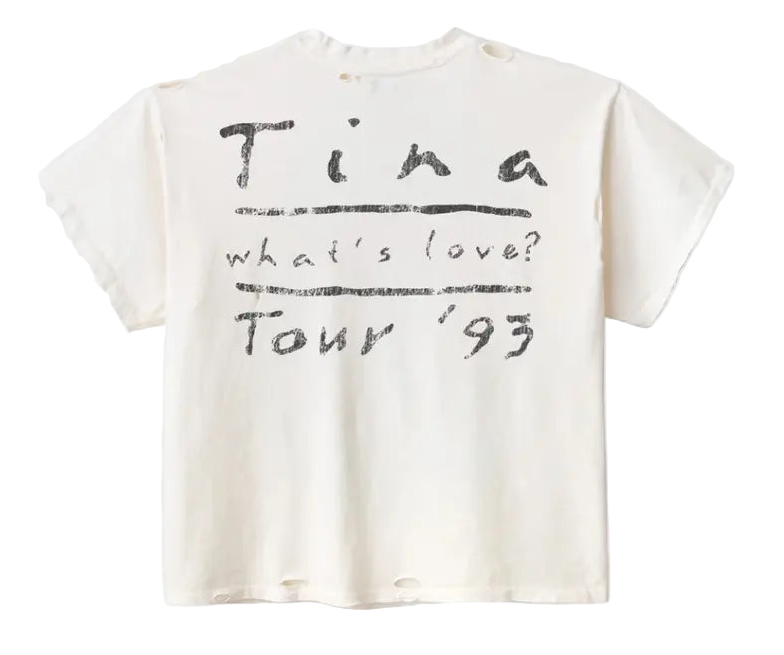
Protecting a label’s identity is simplest when it operates without partners. Every fabric choice, every graphic placement, every fit call is kept inside the control of a single team. As soon as a additional creative partner joins, concessions start stacking up. HMDD clothing has built its reputation around specific signals: distressed graphics, oversized silhouettes, and text treatments that reference memory, loss, and time. Those defining markers could readily be flattened into something blander by a collaborator with a sharper, more commercial aesthetic.
It is here that holding back becomes a calculated strength. Reports and reviews from the HMDDLA community time and again make clear that joint-project items still carry the brand’s core visual DNA — the same weight of fabric, the same worn-in printing technique, matching sentimental wording on tags and packaging inserts. Such consistency doesn’t happen by chance. This implies an internal rule: partners are free to adjust palette or cut, but that core emotional happy memories don’t die tee current goes unchanged.
Consider the alternative. If HMDD released a collab hoodie with bright, glossy branding and zero reference to its usual themes, longtime buyers would notice within seconds. The brand’s audience isn’t drawn in by trend-chasing; they’re drawn in by specificity. A single misstep — one collection that feels like merchandise rather than memory — could cost more trust than any short-term sales bump would repay.
What Exactly Collaborations Disclose Regarding HMDD’s Aesthetic Philosophy
Design habits that might otherwise go overlooked get put under a magnifying glass by each partnership. Whenever HMDD teams up with an external collaborator, particular signatures repeat across almost every drop: substantial cotton foundations (commonly in the 280–400 GSM range for hoodies and sweatshirts), boxy boxy cuts, and manually worn-in or overdyed finishes that lend each piece a broken-in quality instead of a factory-fresh one. This tendency is especially visible in HMDD sweatpants — an easy, tapered fit, ribbed cuffs, and a textile touch that favors softness over sharp tailoring.
The same reasoning carries over to HMDD shorts. Rather than treating shorts as a filler category, HMDD applies the identical worn-finish methods and type treatments seen across jackets and hoodies, which keeps a whole collection feeling cohesive instead of disjointed. This cross-category coherence — hoodies, sweatpants, shorts, tees — is part of what makes people search specifically for “best hmdd clothing” rather than defaulting to a run-of-the-mill streetwear alternative.
- Material density stays thick and solid, even in warm-weather pieces like shorts.
- Type styling leans on script-style or distressed-stencil styles instead of crisp sans-serif branding.
- Hue selections gravitate to faded blacks, muted greys, and muted earth tones over vivid colors.
- Visuals evoke memory, time, and impermanence rather than simple logo display.
When a collaborator enters this world, they’re effectively required to adopt HMDD’s design vocabulary instead of pushing their own style. It’s a bigger demand than it seems, and that’s the reason not every pitched collaboration ends up released.
The Business Logic Behind Selective Partnerships
Streetwear economics prize rarity and penalize excess visibility. A brand that collaborates with everyone eventually collaborates with no one memorably. HMDD’s drop schedule seems to prioritize small batch runs and occasional joint releases rather than a constant stream of co-branded product. That pacing does two things at once: it safeguards the brand’s sense of rarity, and it gives the design team enough runway to make sure every partnership remains clearly identifiable as HMDD.
There’s also a pricing logic worth noting. Streetwear collab items usually cost more than regular catalog pieces — commonly priced 15–30% higher — because of added production complexity, limited runs, or dual-branding costs. Customers researching an “hmdd review” before buying often flag price-to-quality ratio as a deciding factor, so a collaboration that hikes the price but not the perceived skill behind it is more likely to draw complaints than compliments.
That’s the reason the most astute fashion partnerships operate more as shared research-and-development efforts than promotional gimmicks. Two teams pool techniques — perhaps one brings a dyeing technique while the other supplies a shape — and what emerges should read as deliberate rather than thrown together. If that equilibrium succeeds, both sets of followers become admirers of the counterpart brand. When it fails, both fanbases feel like an afterthought.
Weighing Different Collaboration Strategies
In order to see where HMDD positions itself relative to typical streetwear collaboration strategies, it helps to weigh a few common tactics adopted across the industry in 2026. What follows below outlines three general collaboration patterns seen in the wider streetwear market, not tied to specific named partners.
| Collaboration Style | Main Objective | Usual Drop Scale | Threat to Brand Character |
|---|---|---|---|
| High-frequency co-branding | Increase visibility and foot traffic | Sizable, repeated batches | Significant — brand character erodes with overexposure |
| One-off hype drop | Quick sales spike | Very limited, single run | Moderate — effect fades once hype passes |
| Discerning, values-aligned partnership (HMDD’s typical pattern) | Strengthen core identity while engaging adjacent audiences | Restrained, infrequent | Low — collaborator adapts to brand language rather than supplanting it |
That third row is where HMDD’s collaborations tend to land. The brand doesn’t appear interested in flooding release calendars with co-branded product. Instead of that, each partnership appears built to answer a particular creative question — a new fabric process, an unexplored color direction, a new take on distressing — while leaving the emotional core of “happy memories don’t die” completely preserved.
What Shoppers Should Take Away in 2026
If you’re stacking HMDD up against other emerging streetwear brands this year, collaborations offer a useful litmus test. Should a collaborative piece still come across as clearly HMDD — same fabric weight, same worn typography, same emotional resonance — that signals the brand’s identity is stable enough to survive growth. Should upcoming releases begin to feel indistinguishable regardless of the partner involved, that amounts to a warning sign worth monitoring.
Shoppers researching HMDD sweatpants, HMDD shorts, or any collaboration piece should keep an eye on a few concrete details before buying: fabric weight specified in the product description, whether sizing runs true-to-size or oversized by design, and whether the piece is part of a serialized or limited run. These details are more important in collaboration releases than in routine catalog drops, since collaboration pricing tends to run higher and expectations rise accordingly.
At the end of the day, HMDD’s collaborations serve as identity checkpoints rather than pure marketing events. Each one asks whether the brand can grow its reach without losing the specific, memory-driven mood that built its following in the first place. Thus far, the trend hints at a brand prioritizing the protection of its voice over chasing all available attention — and for a label built entirely around emotional resonance, that restraint may be its most valuable asset heading further into 2026.